
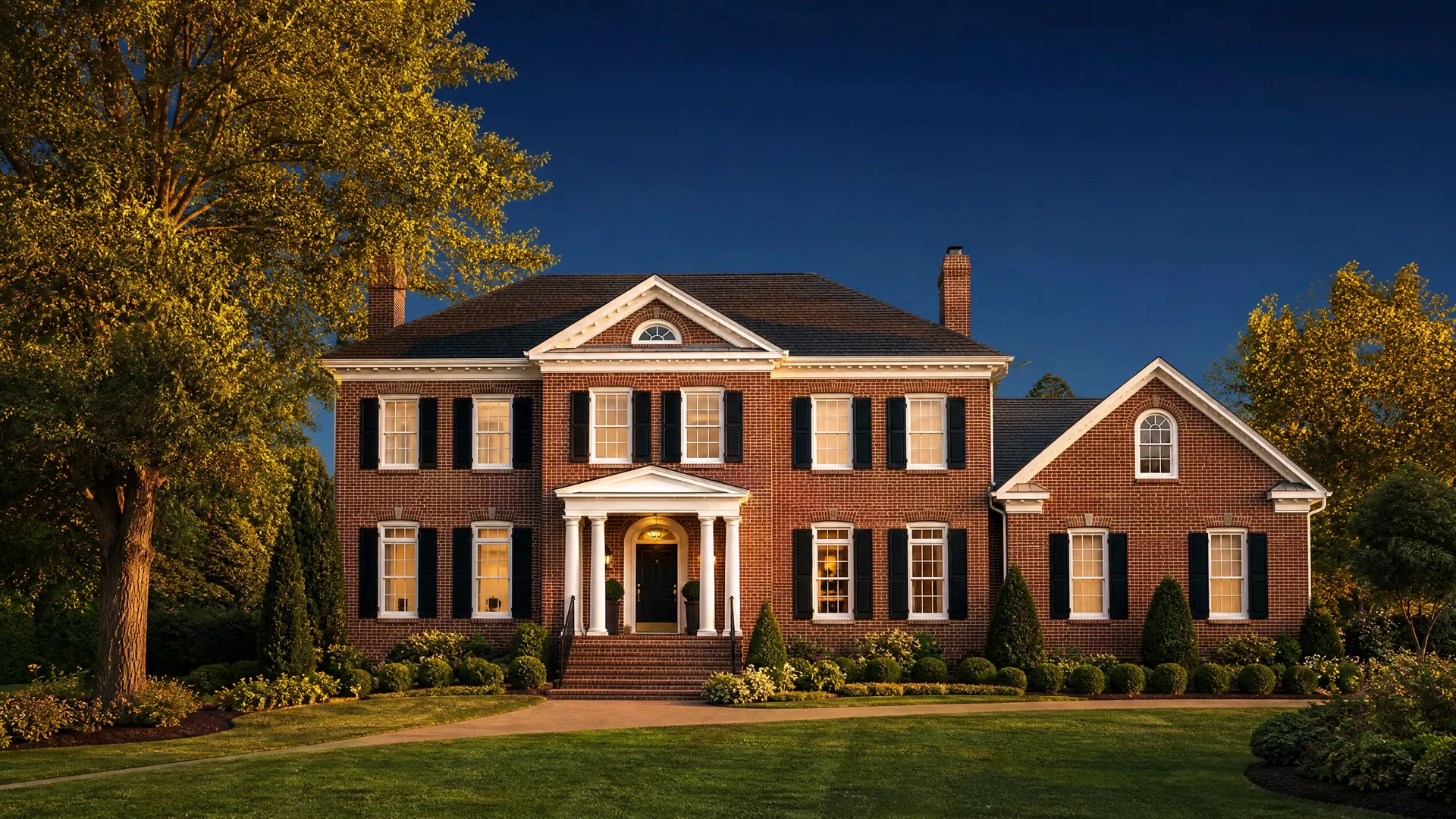
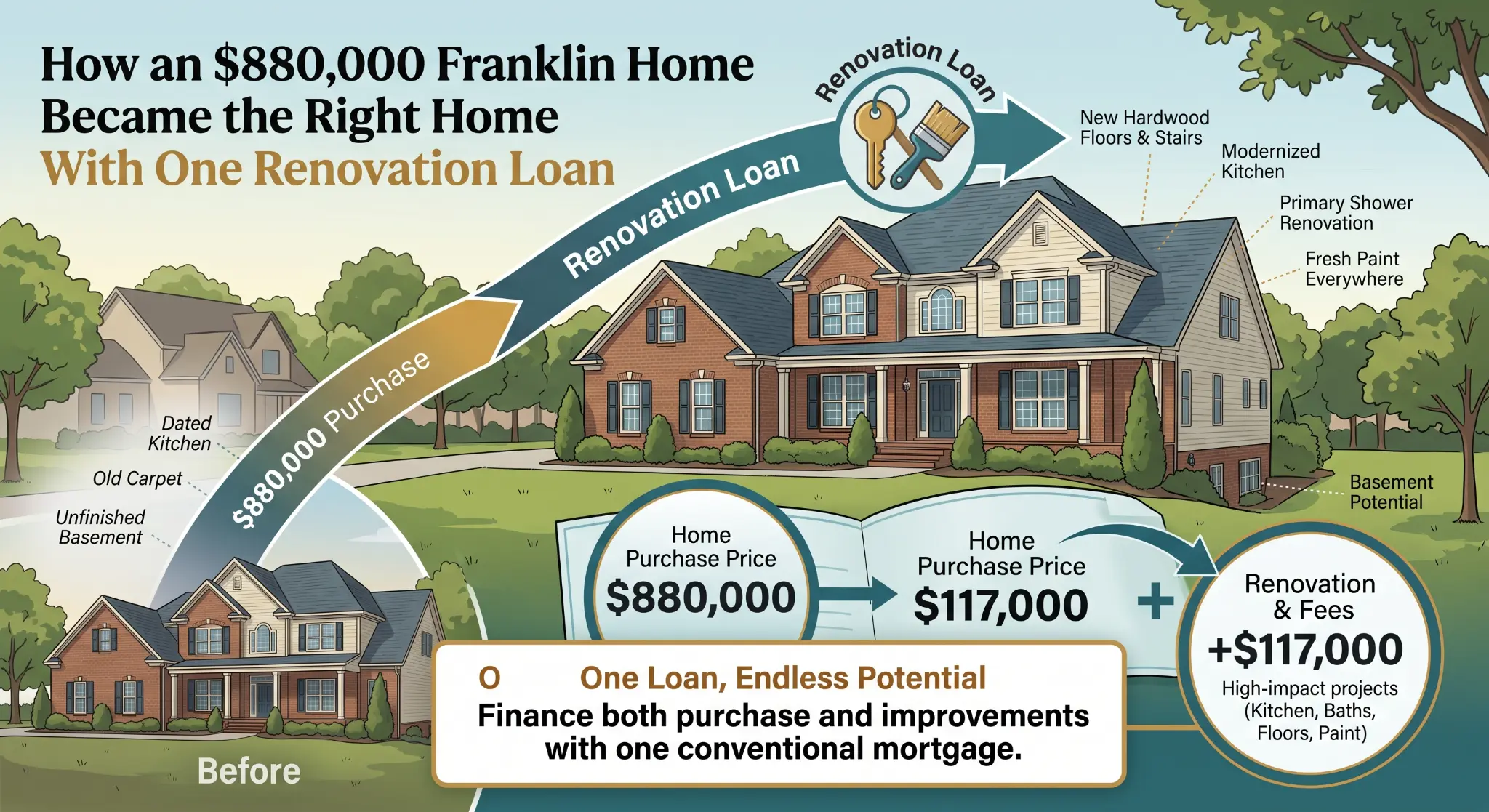
We were standing in the kitchen of an $880,000 home in Franklin, Tennessee, listing everything the buyers wanted to change. And at some point the conversation shifted. They stopped asking, "Is this the right house?" They started asking, "What could this house become?"
The kitchen felt dated.
The carpet needed to go.
They wanted hardwood stairs, fresh paint, updated flooring, a renovated primary shower, office doors, deck repairs, and a cleaner backyard.
Then we got to the basement.
Now we were talking about a kitchenette, a bathroom, guest space, a workout room, maybe even a mother-in-law suite. Outside: a screened porch, grilling area, better landscaping, possibly a pool.
The house, as it sat, wasn't done for them.
But the things you can't easily change were exactly right:
- The neighborhood and location
- The lot and backyard privacy
- The floor plan and square footage
- The full basement and long-term potential
That shifted the conversation.
Location is the one thing you cannot renovate.
You can change the kitchen, the carpet, the bathrooms, the basement. You cannot pick the house up and move it to a better neighborhood. You cannot renovate the school district. You cannot add land to the lot.
Instead of "Should we buy this and spend $100,000 cash after closing?" we asked, "Can we roll the purchase and renovation into one loan?"
The Numbers on This Franklin Purchase
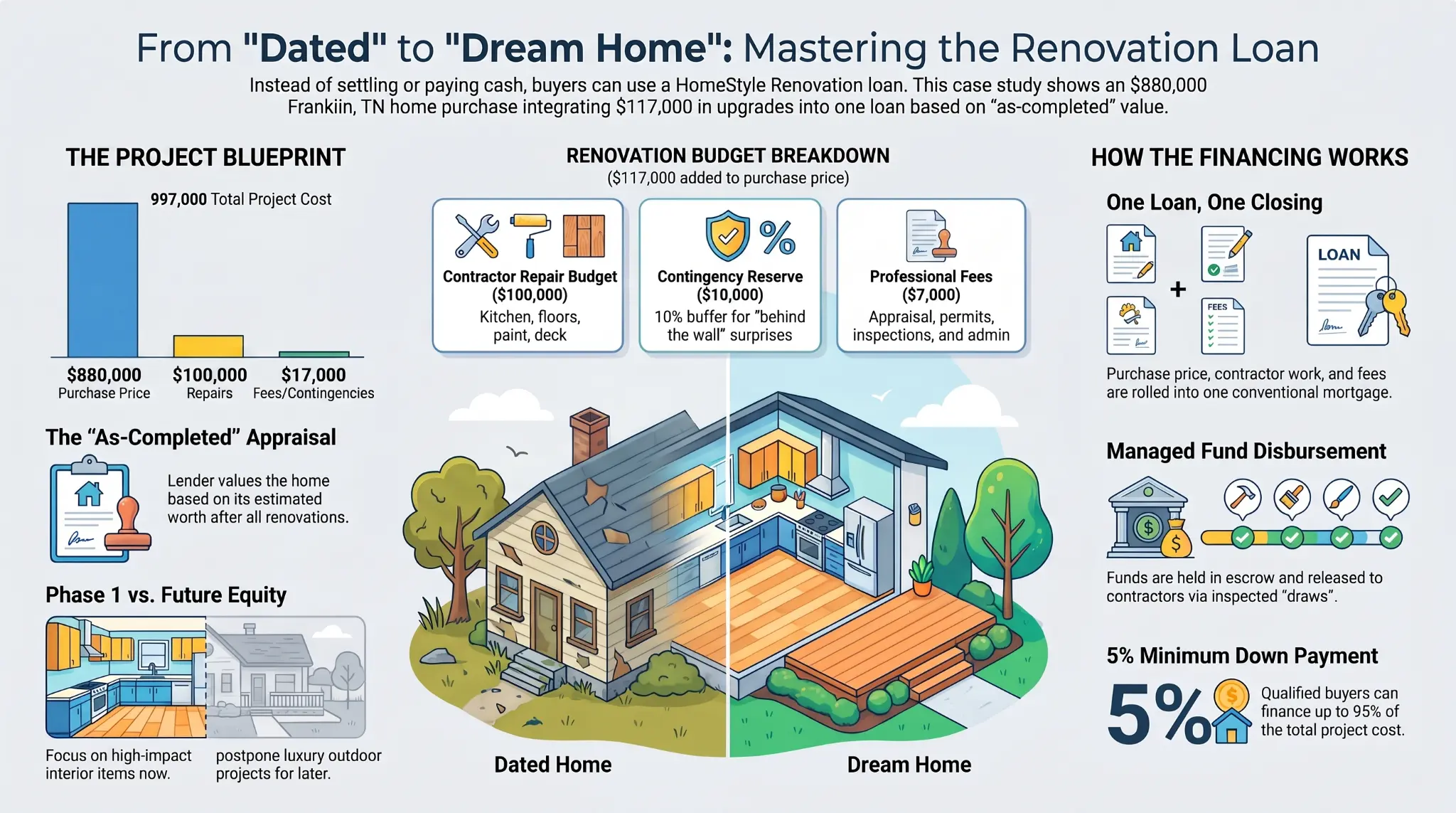
- Sales price: $880,000
- Contractor repair budget: $100,000
- Contingency reserve (10%): $10,000
- Estimated renovation-related fees: $7,000
- Total project cost: $997,000
This is where a Fannie Mae HomeStyle Renovation loan can make sense.
Most Buyers Think They Have Two Options
Option 1: Buy it and fix it later with cash. The problem is that $80,000 to $100,000 in out-of-pocket renovation costs on top of closing costs, moving costs, and a new mortgage payment is more than most families have sitting around.
Option 2: Keep waiting for the perfect move-in ready home in the right location. The problem is that home is the most competitive house on the market. It goes fast, it goes over asking, and it may not exist at your price point.
Most buyers end up settling for a house they don't love, or stalling indefinitely. Neither is a plan.
There is a third option.
What a HomeStyle Renovation Loan Actually Does
A HomeStyle Renovation loan lets a qualified buyer finance:
- The purchase price
- Approved contractor work
- A contingency reserve
- Eligible renovation fees (appraisal, inspections, consultant, permits, title updates, renovation administration, final inspection)
All inside one conventional mortgage.
The seller still gets the full $880,000 at closing.
The renovation funds do not go to the buyer. They're held in a renovation account and released in stages as work is completed and inspected.
How the Appraisal Works
With a renovation loan, the appraiser looks at two things:
- The home in its current condition
- The home "as completed" after the approved renovations
They review the contractor's bid and scope of work, then estimate the finished value. The lender uses that as-completed value to confirm the property can support the total project cost and loan amount.
Spending $100,000 on improvements does not guarantee the value goes up by $100,000. The appraiser still weighs:
- Comparable sales
- Neighborhood values
- Size, quality, and demand
- Whether the finished home fits the area or is over-improved
If the appraisal doesn't support the full project, the buyer can reduce the scope or bring extra cash.
Why the Renovation Budget Was $117,000 (Not Just $100,000)
The buyers' construction plan was $100,000. The additional $17,000 covered:
- 10% contingency reserve for surprises behind the walls
- Renovation appraisal
- Consultant review and work write-up (for scope, pricing, and compliance)
- Draw inspections as work is completed
- Title updates and lien checks
- Renovation department administration
- Permit allowance
- Final inspection
These costs are there to protect the buyer, the lender, and the project.
What Got Done Now vs Later
For this family, the smart move was a focused first phase:
- Kitchen improvements
- Primary shower renovation
- Interior paint and new flooring
- Carpet replacement and hardwood stairs
- Deck repairs and office doors
High-impact, everyday items fit into the $100,000 contractor budget.
Bigger projects like a basement kitchenette and bath, screened porch, major landscaping, or a pool were postponed for a later phase once they settled in and built more equity.
How Contractor Payment Actually Works
The contractor doesn't get $100,000 at closing.
Instead:
- Buyer and contractor agree on scope and price.
- Lender approves the contractor and project.
- Loan closes. Renovation funds go into the renovation account.
- Contractor completes a stage of work.
- An inspector verifies it.
- The lender releases that draw.
The contractor must be comfortable with staged payments and provide detailed bids, documentation, and lien waivers where required.
Why the Agent You Choose Matters
A renovation loan offer looks a little different on paper. If the listing agent on the other side hasn't seen one before, their first question is going to be: "Is this actually going to close?"
Offers get passed over not because the loan was bad or the buyer wasn't qualified, but because nobody took five minutes to explain how it works. The right agent has that conversation with the listing agent before the offer is submitted, not after. They explain that the seller gets the full purchase price at closing, that the renovation funds sit in a separate account the buyer never touches, and that it closes like any other conventional loan.
Sellers aren't afraid of renovation loans. They're afraid of the unknown. The right agent removes that fear before it has a chance to form.
The Estimated Loan Structure
Using 95% financing and assuming the appraisal supports the project:
- Total project: $997,000
- Estimated loan: $947,150
- Buyer's minimum contribution toward purchase and renovation: $49,850
Standard closing costs, taxes, insurance, and escrows still apply and are sometimes offset by seller credits.
Why This Approach Worked
Finding a fully renovated version of this same home in the same neighborhood, with the same basement, yard, and layout, at a similar price would be difficult.
The renovation loan gave these buyers a third option:
- Not settle for a house they didn't love as-is.
- Not overpay for someone else's renovation choices.
- Buy the right bones and finance the key improvements that mattered most to them.
The house didn't have to be perfect on day one.
It just had to make financial sense once the purchase and renovation were combined.
If you're looking at a home that needs work but has the right location, lot, and layout, let's run the numbers and see if a renovation loan makes sense for your situation.