
Congratulations.
Getting your offer accepted is one of the best moments in the home buying process.
And now the next phase begins.
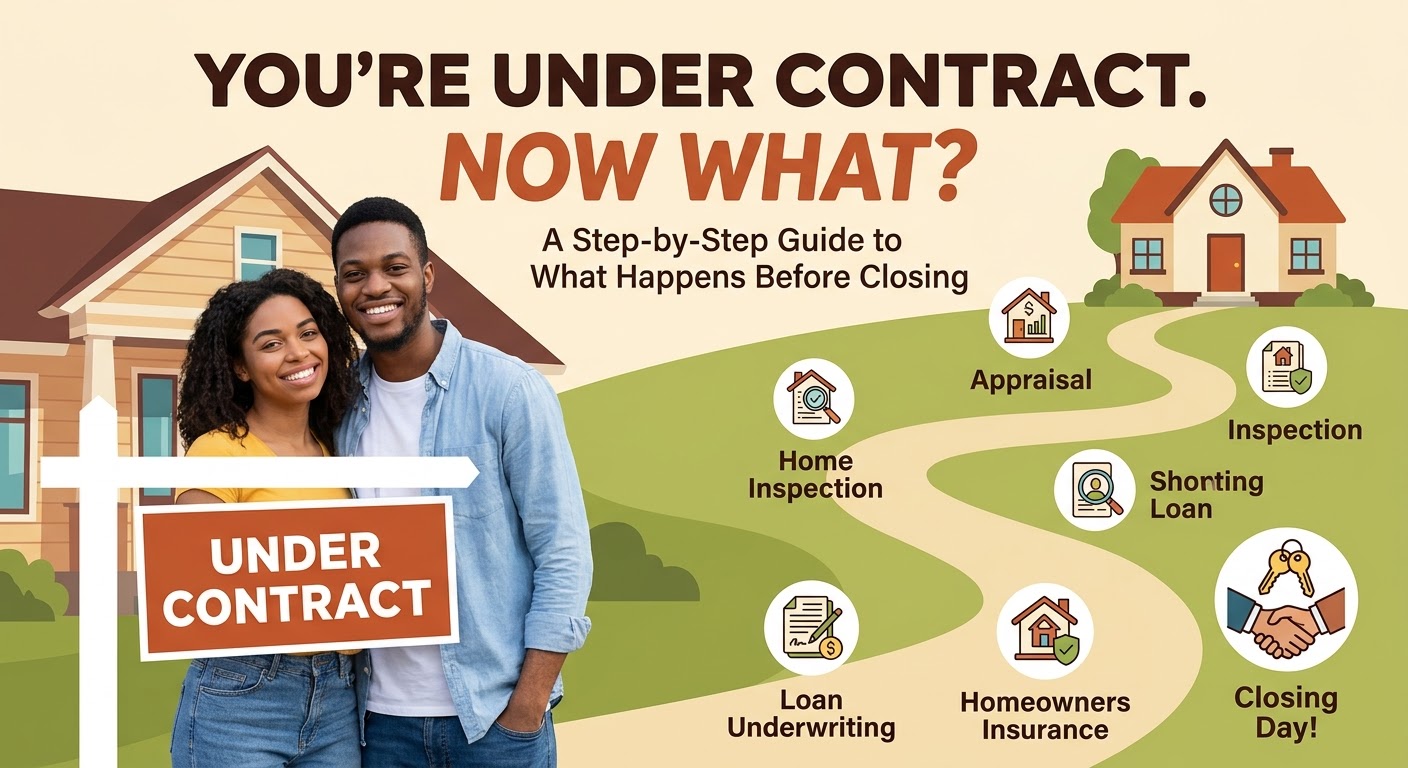
Over the next few weeks, you will hear from your lender, your real estate agent, the title company, your insurance agent, and possibly the appraiser and home inspector. There will be documents to sign, deadlines to meet, and questions to answer.
That is all normal. Here is what to expect.
Step 1: Pay Attention to the Deadlines
Take a moment and celebrate. Getting under contract is a real accomplishment.
Then look at your contract deadlines.
Depending on your contract, you will likely have deadlines for earnest money, the home inspection, financing, appraisal, and closing. Missing one of those deadlines can create problems that did not need to exist.
Your real estate agent and lender will help keep you on track. Just make sure you respond quickly when they reach out.
Step 2: Your Loan Moves Into Processing
Now that there is a property attached to your loan, your file moves to the next phase.
A processor reviews everything and makes sure your file is complete before it goes to underwriting.
This is also when you will probably receive requests for updated documents.
That surprises a lot of buyers. They say, "I already sent my pay stubs."
You probably did. But if those pay stubs are now a few weeks old, underwriting needs current ones. The same thing can happen with bank statements.
Nothing is wrong. The documents simply have to be current.
The faster you return requested documents, the smoother your loan moves through the process.
Step 3: Underwriting Reviews Your Loan
Underwriting is another set of experienced eyes reviewing your loan.
Their job is to verify that everything meets the lending guidelines before your loan receives final approval.
Almost every loan receives conditions. That does not mean there is a problem.
It usually means they need one more document, an updated statement, or clarification on something in the file. This is completely normal.
One of the biggest mistakes buyers make is assuming conditions mean they are about to be denied. In reality, conditions are simply part of getting your loan approved.
Step 4: The Home Inspection
The home inspection is not required by your lender. It is for you.
The inspector looks for issues with the home that may not be obvious during a showing.
Sometimes the report comes back clean. Sometimes it identifies repairs that can be negotiated with the seller.
Your real estate agent will help you decide whether to request repairs, ask for a credit, accept the home as-is, or in rare situations, walk away.
The inspection is designed to help you make an informed decision before moving forward.
Step 5: The Appraisal
Your lender will order an appraisal to confirm the home's value supports the loan amount.
There are three possible outcomes.
The appraisal comes in at or above the purchase price. Your loan keeps moving forward.
The appraisal comes in exactly at the purchase price. Also fine.
Or the appraisal comes in lower than expected. If that happens, do not panic. There are several possible solutions, including renegotiating with the seller, making up the difference, or reviewing the appraisal if something appears inaccurate.
Your lender and real estate agent will walk you through your options.
Step 6: Shop for Homeowners Insurance
One of the easiest ways to delay a closing is waiting until the last minute to shop for homeowners insurance.
Start getting quotes as soon as you are under contract.
Your lender will need proof of insurance before closing. Getting this done early removes one more item from your checklist.
Step 7: Keep Everything Financially the Same
This is probably the most important thing I can tell you.
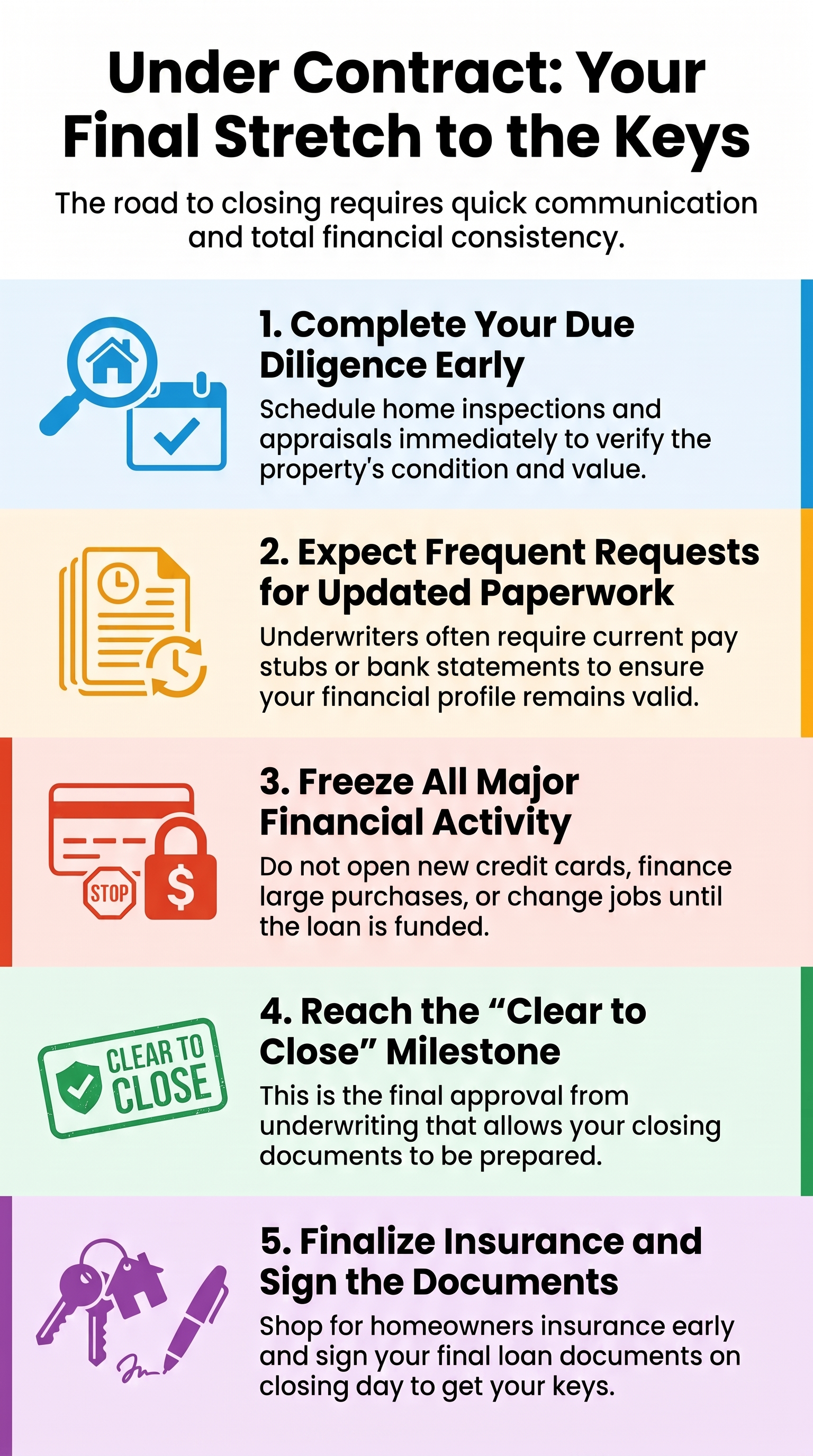
Do not make major financial changes before closing.
Avoid:
- Opening new credit cards
- Financing furniture or appliances
- Buying a vehicle
- Changing jobs without talking to your lender
- Making large unexplained deposits
- Missing payments on any account
Your loan is being approved based on your current financial picture. Large changes can create delays or require additional documentation.
If you are unsure about something, ask your lender before making the decision. It is always easier to answer a quick question than fix a problem after the fact.
Step 8: Stay in Communication
During this stage, you will probably hear from your lender more often than you expected.
That is a good thing.
Every request has a purpose. Whether it is an updated pay stub, a bank statement, or a letter explaining a deposit, each document helps move your loan closer to final approval.
Quick responses can save days during the closing process.
Step 9: You're Cleared to Close
This is the call every buyer waits for.
Once underwriting signs off on your file and all conditions have been satisfied, your loan receives a Clear to Close.
At that point, your closing documents are prepared, you will receive your Closing Disclosure, and your closing appointment can be finalized.
You are almost there.
Step 10: Closing Day
Closing day is usually much easier than buyers expect.
You will review and sign your final loan documents, provide any remaining funds needed to close, and once everything has been completed and funded, you will receive the keys to your new home.
After weeks of preparing, it is finally time to enjoy everything you worked toward.
Questions along the way? Call or text Keith Goeringer at (615) 955-0461 or start a soft-check application at applywithkeithgo.com. NMLS #488023, Barrett Financial Group, NMLS #181106.