
New construction feels safe.
Fresh paint. Clean streets. Brand-new roof, appliances, carpet. No weird smells, no mystery repairs, no past-owner drama.
You walk into the model, the rep is charming, the home is staged perfectly, and the incentives and lender credits sound like "free money." They casually mention prices are going up soon, so you feel like you should grab a lot before it's gone.
That's exactly when you need to slow down.
New construction can absolutely be a smart move. But in big, still-building neighborhoods, there are risks most buyers never see until they're already under contract. And at that point, backing out can be painful and expensive.
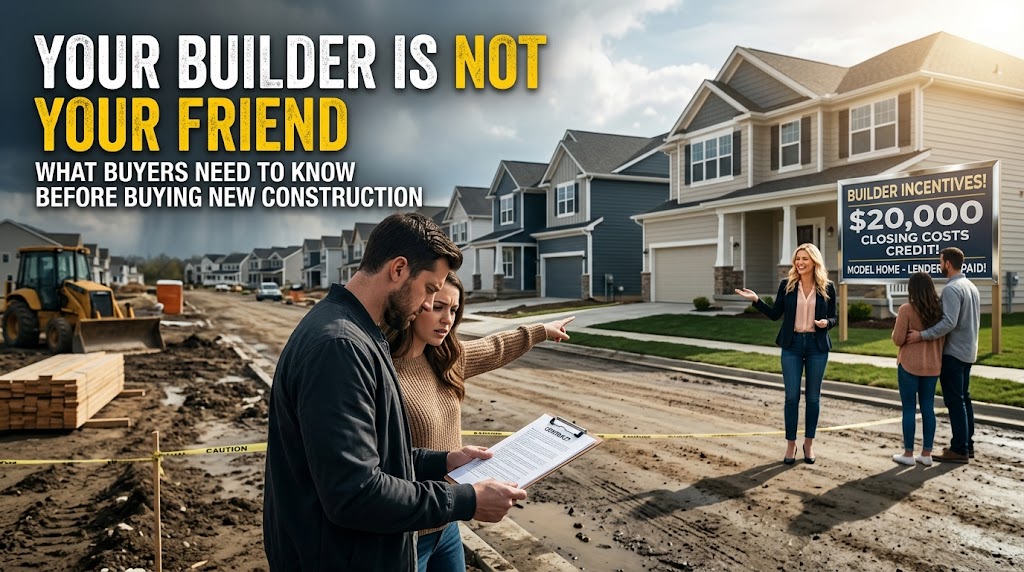
The New-Home Glow Can Hide Real Money Risk
Falling in love with a new house is normal. You picture your stuff in the rooms, the clean kitchen, a garage without oil stains, maybe a playroom or office you've never had before.
The danger is when that excitement makes you ignore how the deal is actually structured.
Builders are not villains. They're businesses. Their job is to sell homes at the highest prices the market will bear, protect future prices in the neighborhood, and keep the project moving on their schedule.
Your job is different: buy the right home, at the right price, with the least financial risk. Those two agendas do not always line up.
The Appraisal Trap Most Buyers Never Hear About
Big builders often raise prices in steps inside a community. Example: "We go up $10,000 every 8 homes we sell." Sounds like built-in appreciation. Maybe.
But the appraiser still has to support your contract price using closed sales. If prices have jumped faster than the data supports, the appraisal can come in low.
Say you sign at $550,000. The appraisal comes back at $530,000. Your lender will lend based on $530,000, not $550,000. That $20,000 gap is now your problem. If you have the extra cash, you can choose to bring it. If you don't, you may be stuck.
Depending on the contract, the builder may keep your earnest money and put the home back on the market at the same price for the next buyer. Most buyers assume, "If it doesn't appraise, the builder will just lower the price." Sometimes they do. Often they don't, especially if they think someone else will pay it.
The Builder's Sales Rep Doesn't Work for You
The on-site sales rep may be kind, helpful, and responsive. They may walk you through floor plans, options, timelines, and incentives.
But they work for the builder.
They are not comparing the price to closed sales to protect your downside, evaluating your long-term resale risk, or thinking about what happens if you need to sell in 2 to 5 years while the builder is still building. That's why you need your own expert reviewing the numbers and the contract before you sign.
Big Neighborhood, Big Resale Question
If you buy in a large, still-building community and need to sell while the builder is still selling, your "used" home competes with their "new" homes.
The builder has model homes, on-site staff, a marketing budget, lender incentives and rate buydowns, and upgrade packages and price flexibility. You have a home that's technically "resale" with no built-in incentives machine.
Even if your home is only a few years old, buyers may compare you against the brand-new one down the street with a lower advertised payment because of builder incentives. That can drag down your resale price, especially if you might move again within a few years.
A Safer Way to Buy New Construction
New construction is usually less risky when the community is mostly built out. At that point there's less new inventory competing with you, there are more closed sales to support your price, and resale demand and pricing are clearer.
You still want someone to review current builder inventory and pricing, recent closed comps, appraisal support, incentives and how they affect real value, HOA, taxes, and any special assessments, and future phases or nearby competing projects.
The point: know what you're walking into before you sign.
The Builder's Lender vs Your Best Deal
Builder incentives for using their lender can be good. They can also distract you from a bad overall loan.
You need to compare the full picture: rate, fees and closing costs, size and structure of the builder credit, monthly payment and cash to close, and appraisal and resale risk. A big credit on the wrong loan is still the wrong loan.
Don't Let Pressure Make the Decision
You will hear things like: "Prices are going up soon." "This lot won't last." "We have another buyer interested." "These incentives expire this weekend." Sometimes that's true. But pressure is not a plan.
Before signing, you should clearly understand what happens if the home doesn't appraise, how much earnest money is truly at risk, how many homes are left to build and for sale, whether nearby resale homes are moving or sitting, and if you'd be competing with the builder if you sell in 2 to 5 years.
This is not about hating on new construction. It's about treating it like a serious financial decision, not a showroom impulse buy.
Final Thought
Your builder is not your friend. They might build a great home and treat you well. But they are paid to protect their margins, not your downside.
You need someone on your side who understands mortgages, appraisals, builder pricing strategies, and resale dynamics in your local market. That's what I do.
If you're thinking about a new construction home, talk to me before you sign.