
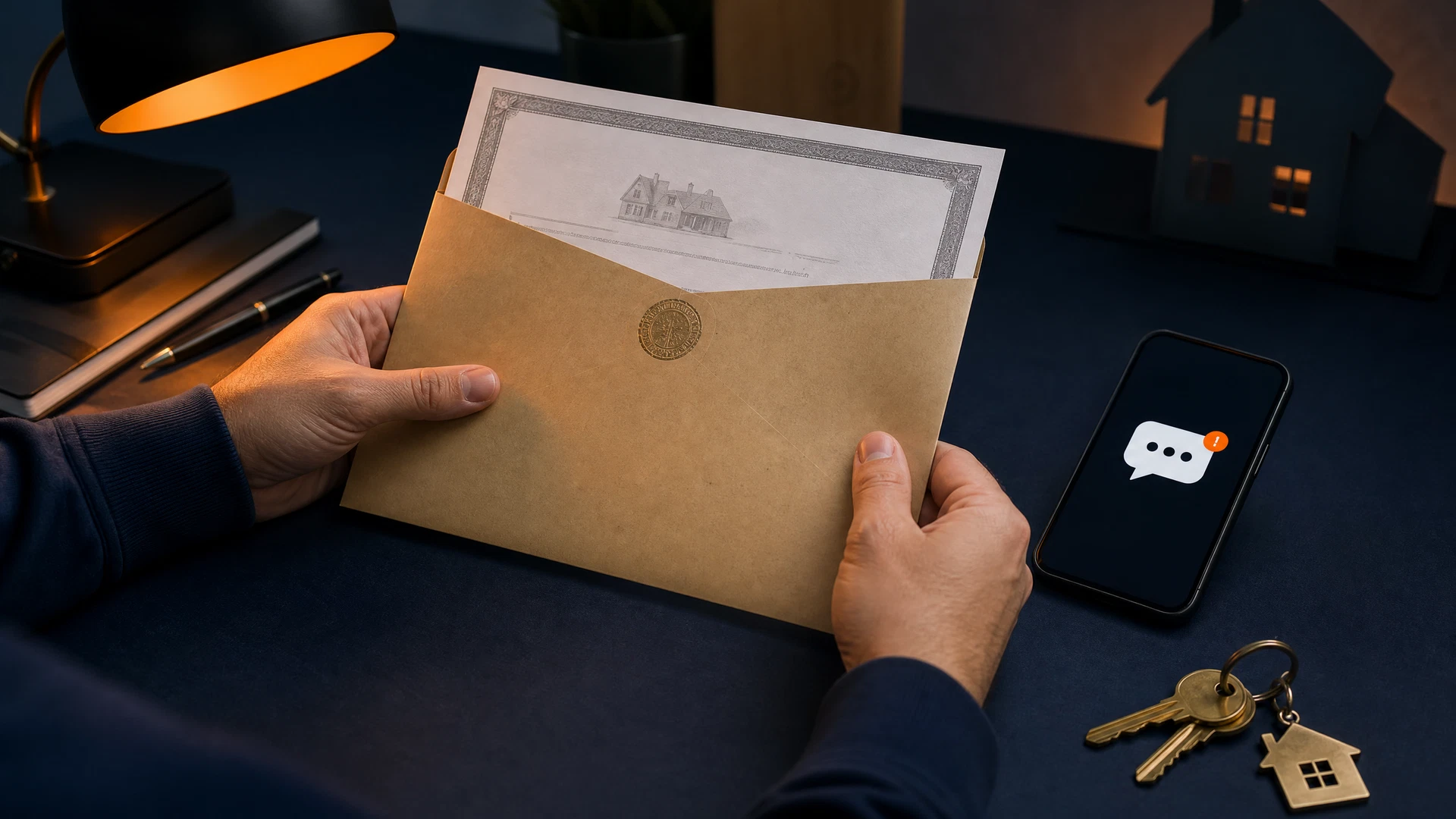
That official-looking property letter in your mailbox may be a private solicitation, not a bill or notice from your county. Before you mail a check, call a number, or give anyone information, read the fine print and verify the sender through an official county website or a statement from your real lender.
Last week, a past client texted me a picture of a letter that had their property address, recording information, a document number, and a response deadline. It asked for $98. They almost mailed the check.
They texted me first. That was the right move.
Why do new homeowners receive these letters?
When a deed or mortgage document is recorded, certain property-record information is available through public records. Private companies can use that information to market document copies, monitoring products, warranties, insurance, and other services.
That does not make every letter illegal. It does mean the letter can look more official than it really is.
The Davidson County Register of Deeds warned homeowners about mailers that falsely said a deed had been transferred and asked for an $89 payment for a copy. The office said it does not send homeowners mail or email requests for payment of that kind.
What makes a property letter look official?
These letters often include information that is real. Your address may be right. The recording date may be right. A parcel number or document number may be right.
That is why they get your attention.
Look for language such as "official," "certified copy," "final notice," or "respond by." A government-style seal, a deadline, and a form to mail back are not proof that the sender is your county or lender.
Read every line near the bottom. A private company may disclose there that it is not connected to any government agency and that the payment is optional.
Do you need to pay for a copy of your deed?
Usually, no. If you need deed or plat information in Williamson County, the county directs you to the Williamson County Register of Deeds.
Use the county website to find the right office and contact information. Do not use the phone number on a letter until you know who sent it.
Your title company may also have a copy of the documents from your closing. If you are not sure what you need, call the county office or your title company and ask before paying anyone.
Why do these mailers work?
Closing creates a lot of paper. You are changing addresses, setting up utilities, reviewing insurance, and waiting for mortgage documents. One more envelope can feel normal.
That is what makes a confusing letter effective. It arrives when you are busy and it tries to make a quick payment feel easier than asking questions.
The bigger fraud picture is real. The Federal Trade Commission reported more than $12.5 billion in consumer-reported fraud losses in 2024. It also reported $789 million in losses from government imposter scams. That does not mean every property letter is fraud. It does mean you should verify a letter before you send money.
What other mail should you verify after closing?
Deed-copy mail is only one type of letter that can show up after you buy or refinance. You may also see offers for home warranties, mortgage protection products, property monitoring, loan modifications, insurance, or public-record copies.
Some are ordinary advertisements. Some are misleading. A real bill, tax notice, insurance notice, or lender statement should still be handled. The point is to verify it first.
What should you do before you pay anyone?
- Slow down. A response deadline is a reason to verify the letter, not a reason to rush payment.
- Read the fine print. Look for language that says the company is private or not affiliated with a government office.
- Use an official website. Find your county Register of Deeds, lender, or insurer through a web search you start yourself.
- Call a verified number. Use the number on an official county page or your mortgage statement, not the number printed on the letter.
- Save a picture of the letter. You may need it when you speak with the county, lender, or the FTC.
- Text me first. If you are a client and something feels off, send me a picture before you pay it.
What if the letter says your deed was transferred?
Do not panic. A letter is not proof that anything changed with your ownership.
Nashville officials warned about mailers that made homeowners think their deed had been transferred. If you are concerned, contact the Register of Deeds through its official website and ask what is actually recorded for your property.
For Williamson County, the Register of Deeds directory lists the office in Franklin and its public phone number. Start there, not with the sender of the letter.
What should you keep from your closing?
Keep your closing disclosure, promissory note, deed of trust, deed, title policy, and contact information for your title company and servicer in one place. A digital folder works well if you can find it later.
You may not need those documents often. When a letter shows up, having the real information makes it easier to compare what you received with what is actually connected to your home.
My promise after you close
My job does not end when you get the keys.
If you receive a mortgage letter, property notice, insurance request, tax notice, or payment request that does not look right, take a picture and text it to me. I will tell you whether it looks legitimate, misleading, or worth a call to the right office.
If you are still getting ready to buy, read You’re Pre-Approved. Now What? so you know which real documents to expect before you write an offer. If you are already under contract, You’re Under Contract. Now What? walks through the steps from contract to closing.
Sources and what to verify
- Davidson County Register of Deeds warning about official-looking deed mail and false transfer claims.
- Williamson County Property Data Search for the county's guidance on where to request deed or plat information.
- Williamson County Register of Deeds directory for current office contact information.
- Federal Trade Commission fraud data and ReportFraud.ftc.gov for consumer reporting guidance.
County processes, document fees, and recorded-property information can vary. Confirm the current facts for your property through the official county office before you make a payment or act on a notice.