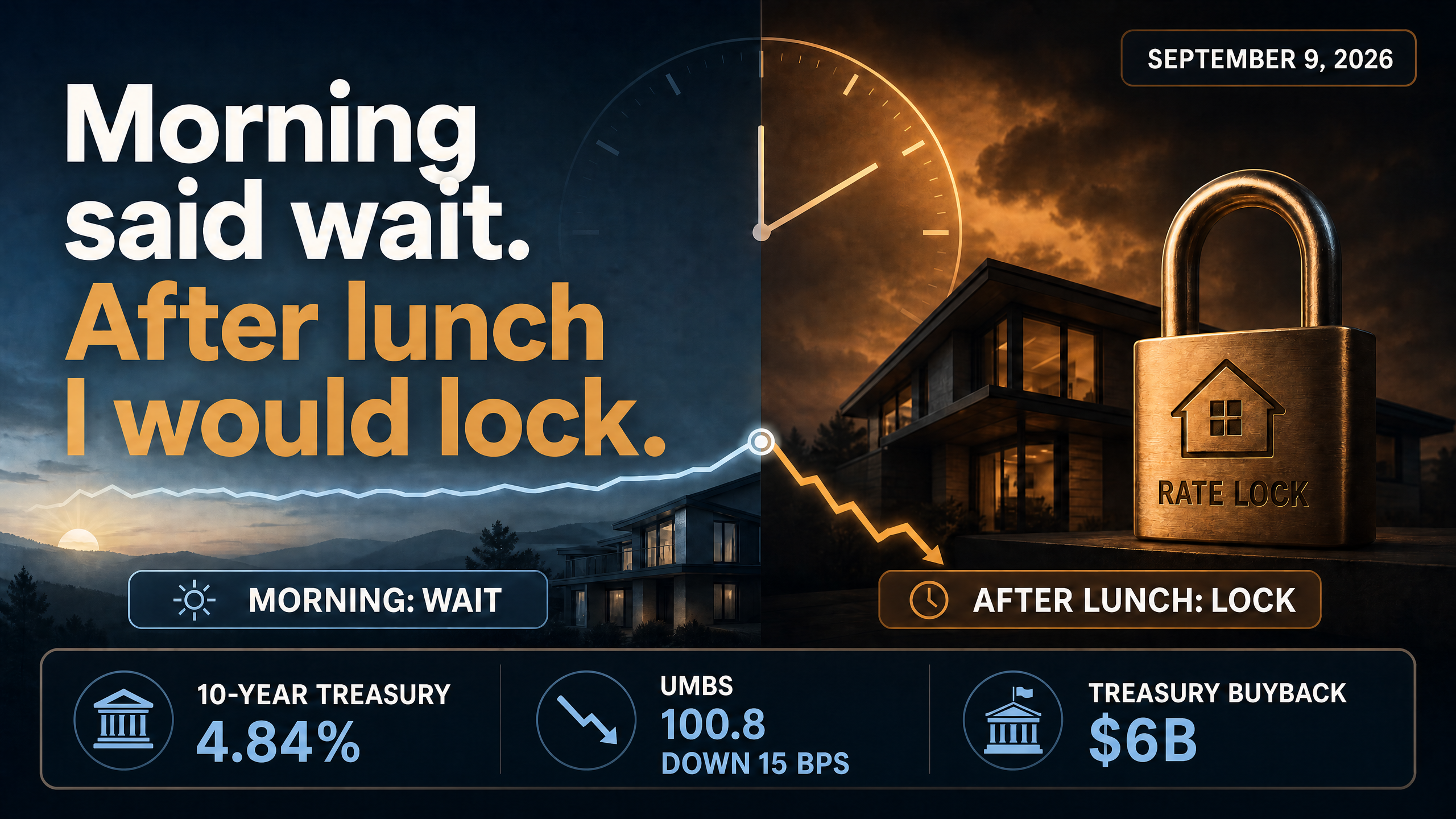
The morning call was to carefully float. After lunch, I would lock a loan already in process.
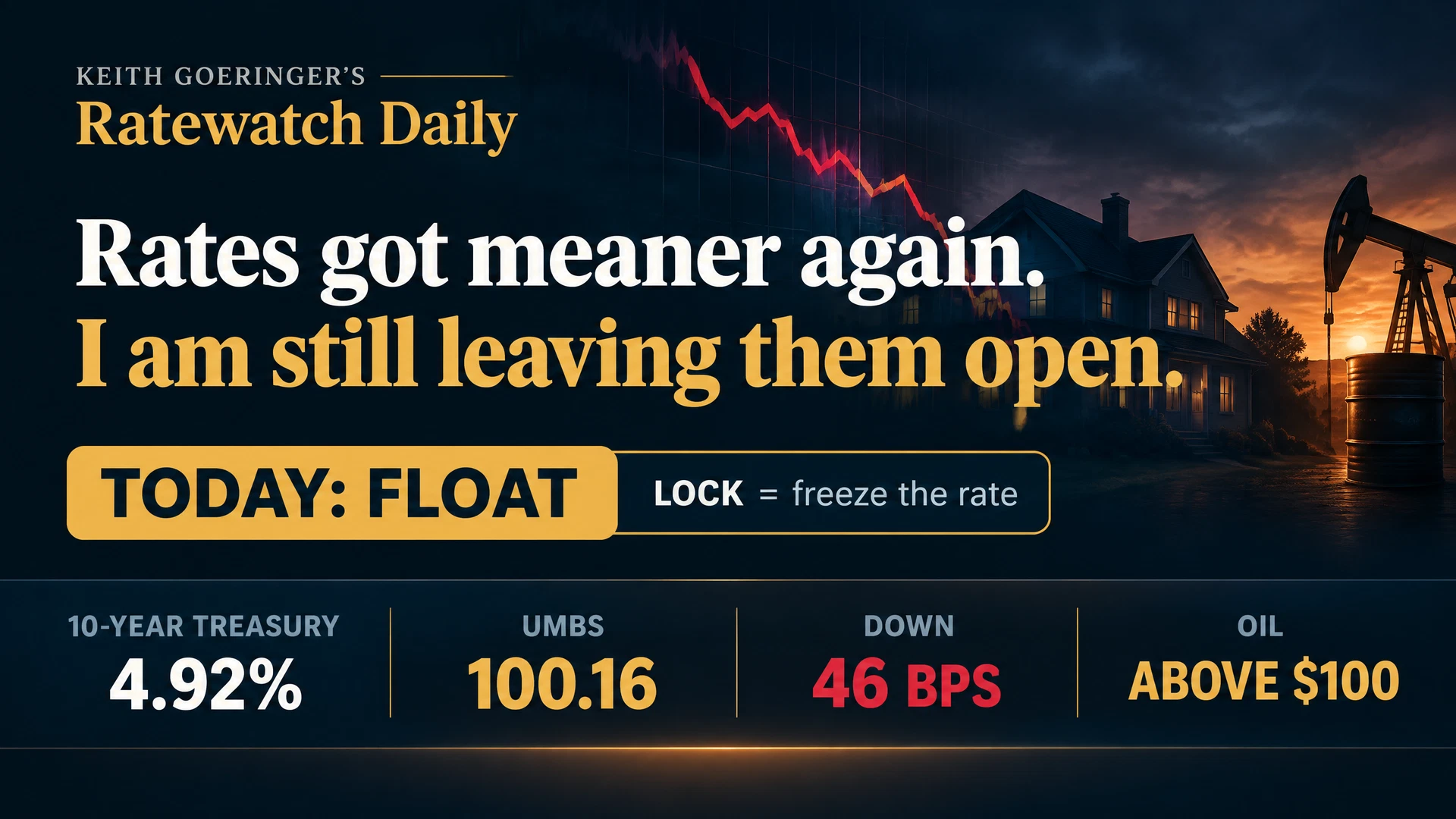
A float leaves the rate open. A lock freezes an agreed rate for a set period. Carefully floating means you wait, but you watch the market and the payment.
By late morning, the professional market update supplied for this post showed UMBS near 100.8 and down about 15 basis points. The 10-year Treasury was up about 4 to 5 basis points near 4.84%.
Bond prices going down puts pressure on mortgage rates to move up. Lenders can reprice at different times and by different amounts.
If you have a loan in process and the rate is still open, I would lock.
Why did the call change after lunch?
The morning float made sense while mortgage bonds were holding their earlier floor. Then the setup changed.
Oil was near $96 per barrel after more tanker strikes. Higher oil can add to inflation pressure, which is usually bad news for bonds.
Then the Treasury buyback came in at $6 billion, below the higher amount the market had hoped to see.
Mortgage bonds sold after that number. The floor that held earlier in the day gave way, and the 10-year Treasury pushed through the level the market had been watching.
What does a 15 basis point UMBS move mean?
It does not mean your mortgage rate moved 0.15%.
The basis-point move describes mortgage-bond prices. Lenders use those prices as one input when they set rate sheets. Different lenders can reprice at different times and by different amounts.
That is why I focus on the direction of the tape and the actual rate sheet for your file instead of trying to convert one bond move into one consumer rate change.
What does the mortgage-bond chart show?
The chart below is the professional UMBS price snapshot supplied with this update.
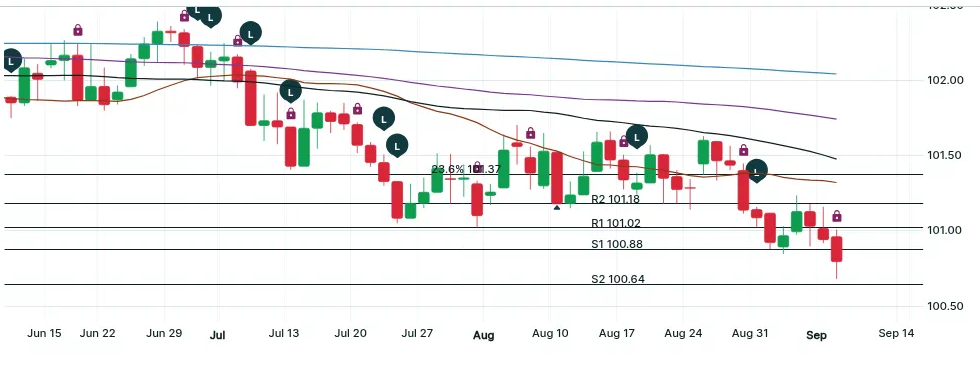
The chart belongs inside the article because it explains the intraday change. It is not the cover image.
Did the softer payroll measure help?
The weekly private-payroll measure in the professional update looked soft.
Soft hiring can help bonds. It did not carry the day this time. Oil and the Treasury buyback reaction were louder.
What did the mortgage-application report show?
The professional update said the survey’s average rate reached its highest level since June 2025.
Purchase applications were flat for the week. Refinance applications fell.
That survey average is not your rate quote. Your loan type, credit profile, property, points, lock period, and lender pricing still matter.
What I would do now
If your rate is already locked, stay put. A lock is an agreement for a defined period. It is not a bet on the next headline.
If you are shopping and not under contract, do not lock a random quote. Get a real payment on a real scenario and decide from there.
If you are under contract or close to locking, I would not get cute with this move. The morning float call depended on the hoped-for bounce. After the buyback disappointed the market and the lock alert hit, I would freeze the rate before a lender reprice makes the payment worse.
The Consumer Financial Protection Bureau’s rate-lock guide explains why lock periods, extension costs, and changes to the application matter.
If you are still shopping
Do not build your budget from a headline or last week’s quote. Run the payment again when you are ready to make an offer.
Use Why the Maximum Approval Is the Worst Number to Base Your Home Purchase On to separate what underwriting allows from what your household can live with.
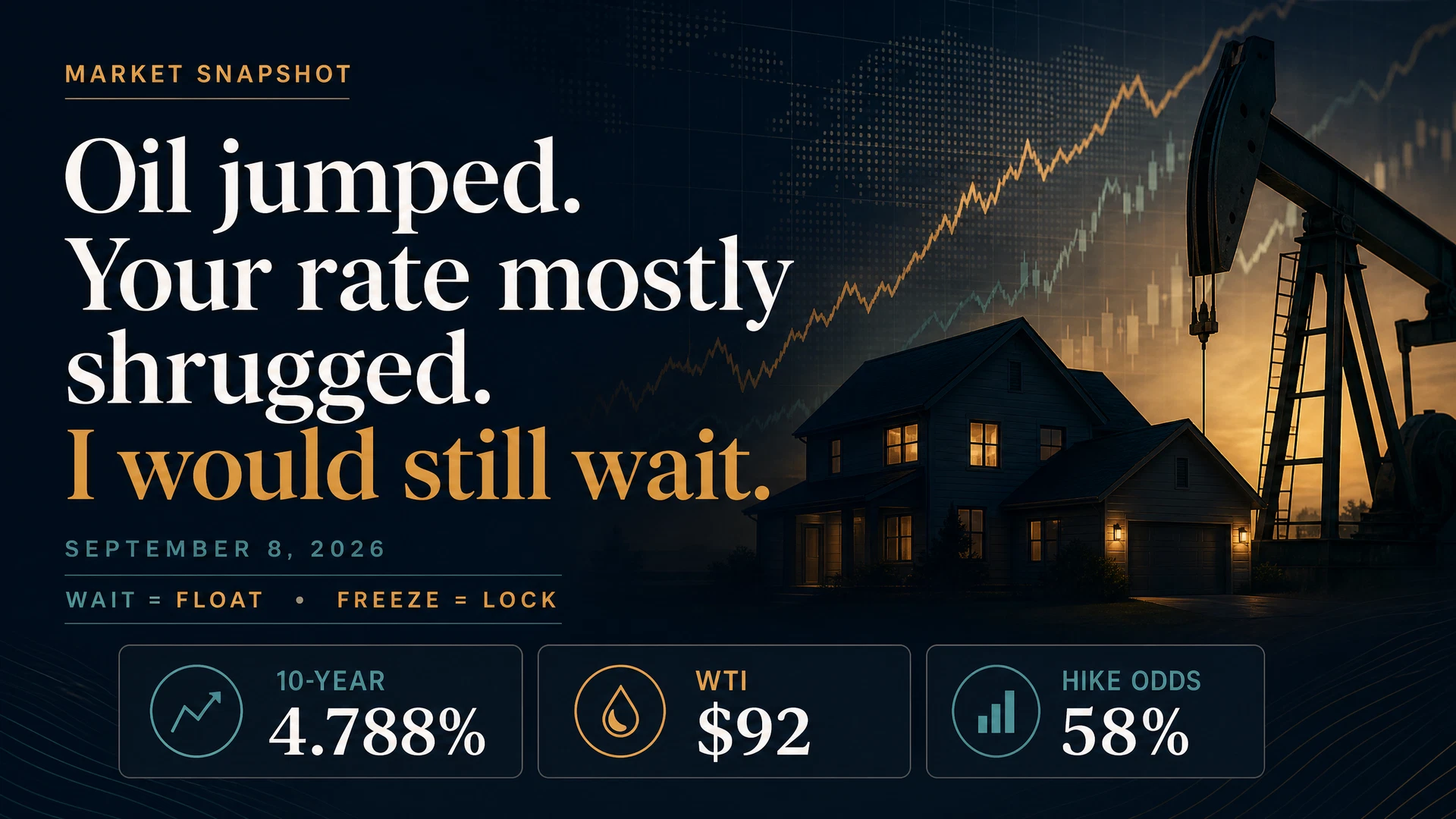
Tuesday’s setup is in Oil Jumped. Your Rate Mostly Shrugged. I Would Still Wait.
Want me to check the file?
If you have a loan in process, send me the scenario through Ask Keith. I want to see the current payment, closing date, lock period, extension policy, float-down terms, and how much movement you can tolerate.
If you want to talk it through, book a mortgage call. If you are still looking, start the soft-check mortgage application before you make an offer.
Follow Ratewatch Daily for the next market update.
Sources and limitations
- Professional mortgage-market data and intraday commentary supplied by the user for September 9, 2026.
- Consumer Financial Protection Bureau: What is a rate lock?
Treasury yields, oil prices, mortgage-bond prices, survey averages, and lender pricing can change during the day. The figures above are September 9, 2026 intraday observations supplied from a professional market source. The 4.84% figure is a 10-year Treasury yield, not a mortgage-rate offer. Mortgage-bond basis points are not the same as a change in a consumer mortgage rate. Lender repricing can vary. This article is dated market commentary. It is not an offer to lend or a promise that locking will produce a better outcome. Lock terms, extensions, float-down options, and the right decision depend on the lender and the individual file.