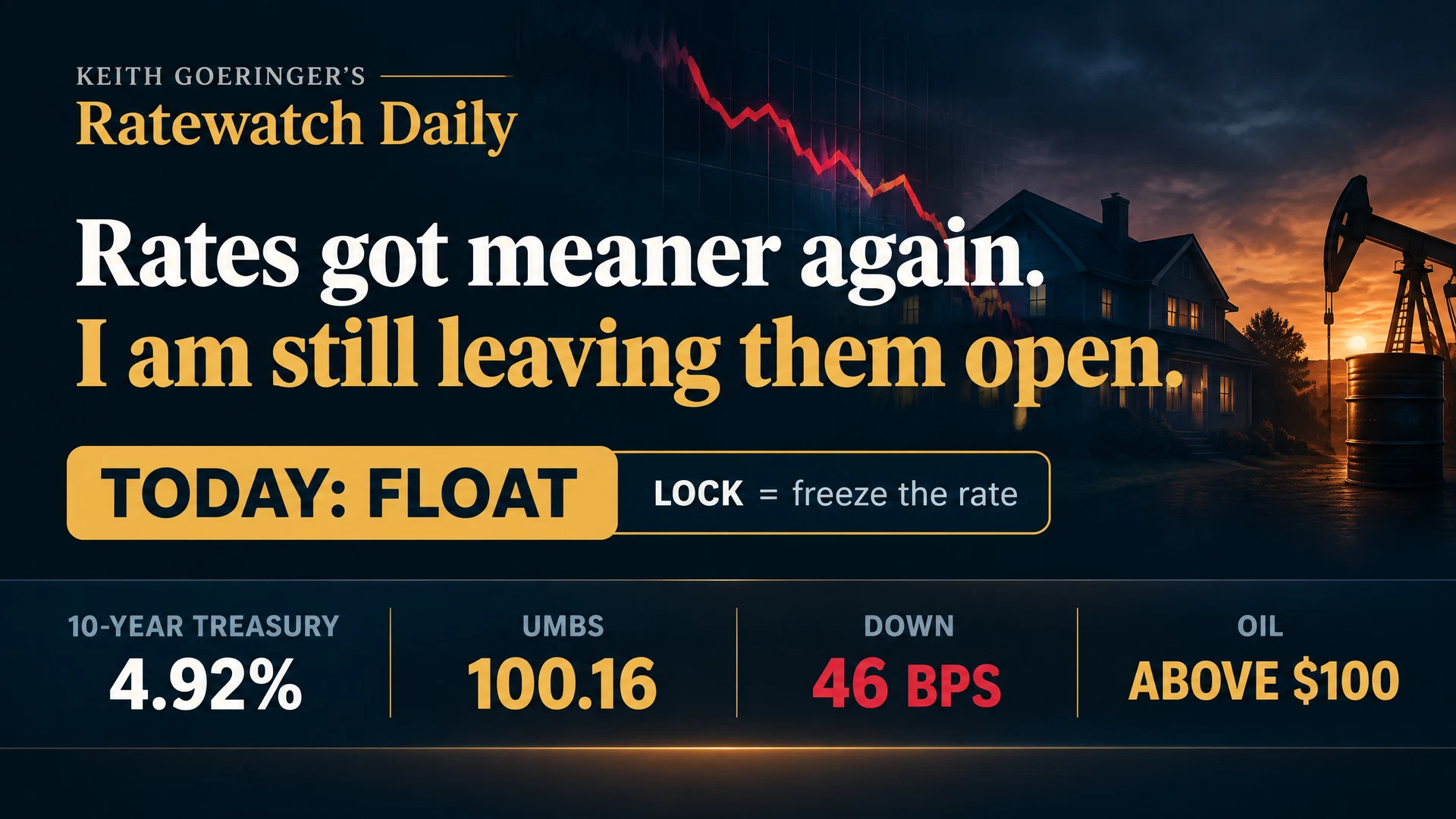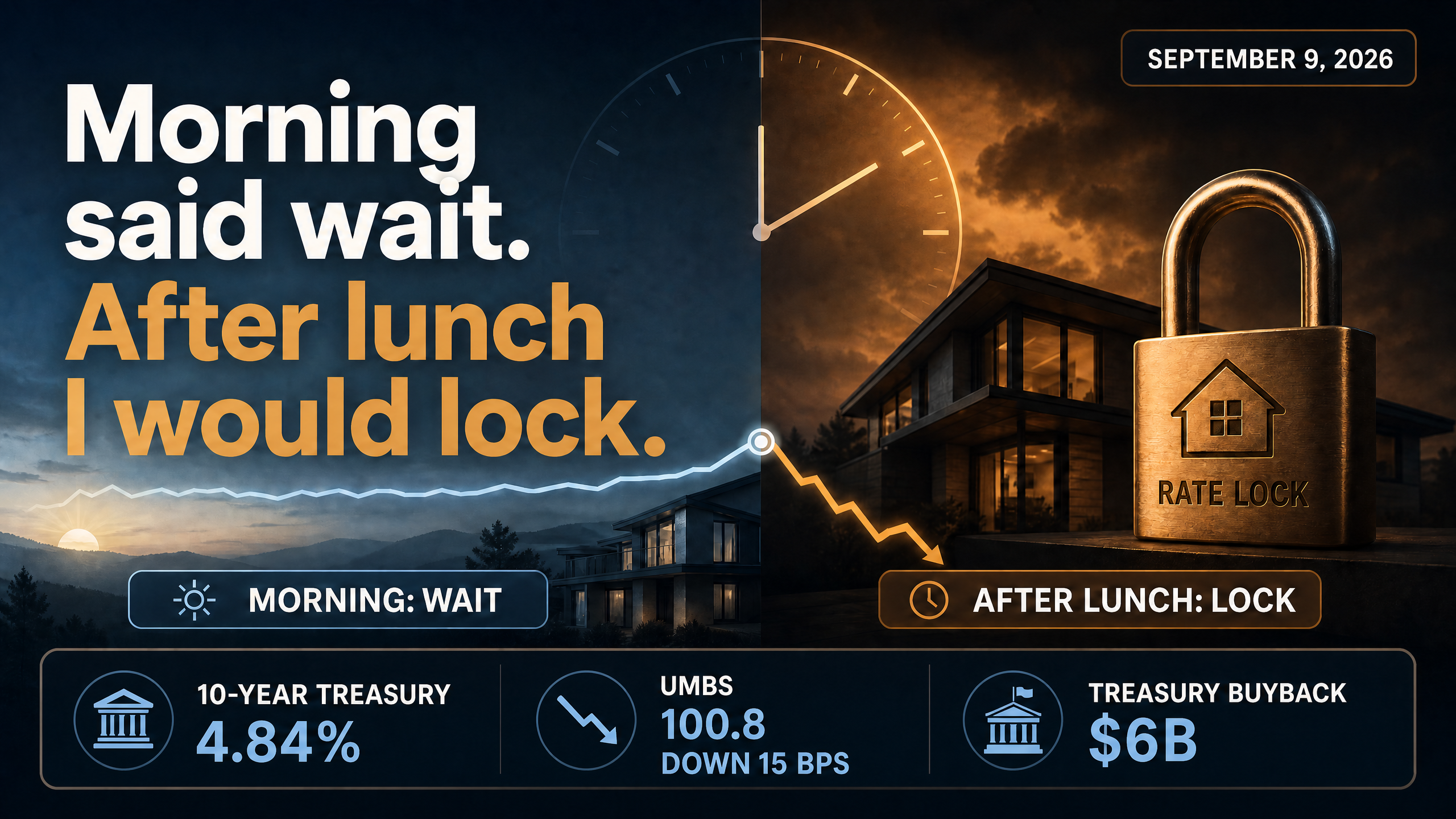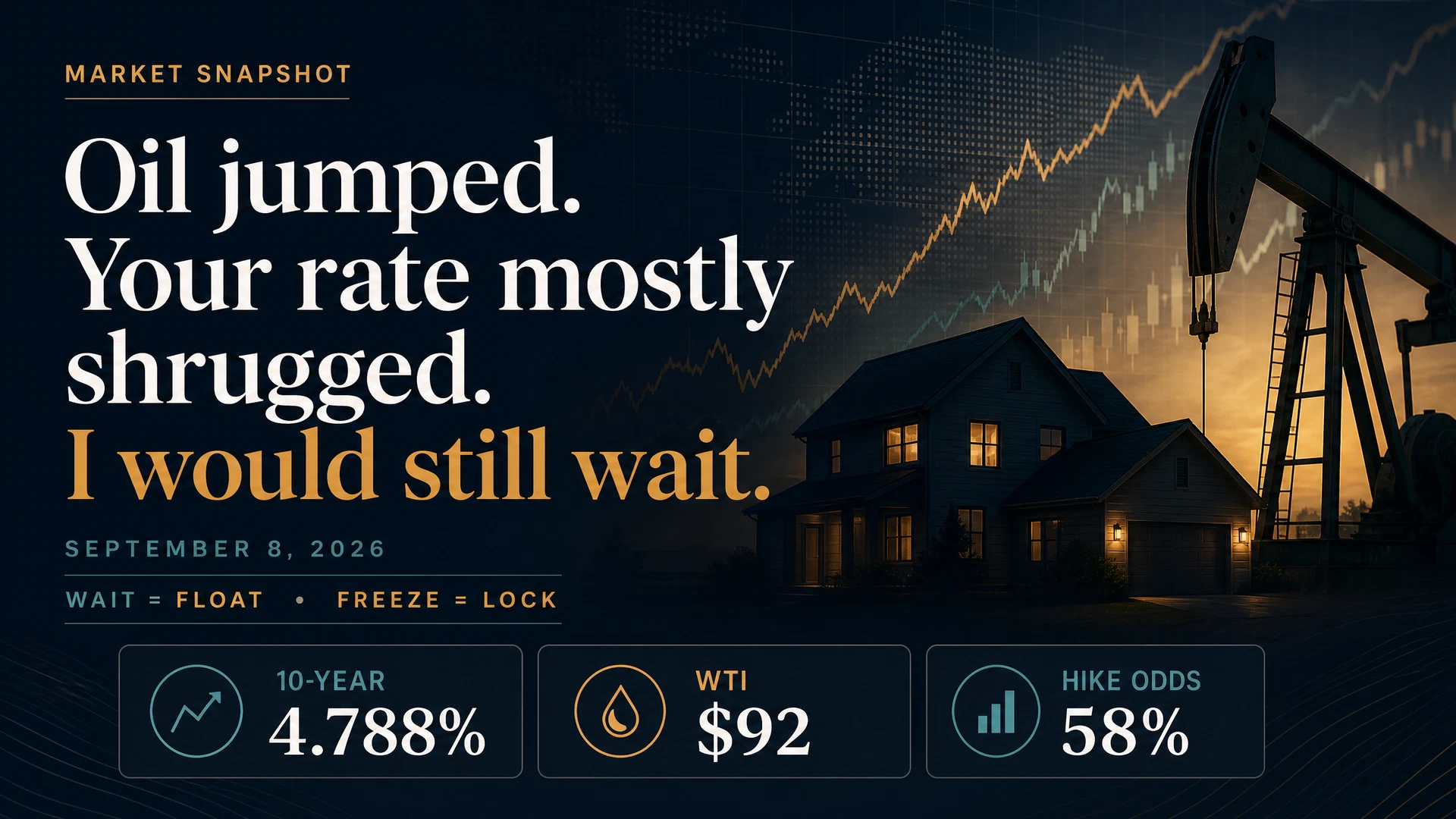

If I had a purchase loan scheduled to close in the next 30 to 45 days and today’s payment worked, I would lock the rate on August 31 rather than float into this week’s jobs reports.
Reuters had the 10-year Treasury yield at 4.764%, up 3.8 basis points and at its highest level since January 15, 2025. Oil moved higher after the United States and Iran traded attacks. Fed funds futures put the chance of a September rate hike at 64%.
That is enough risk for me to start the week locked.
This is not a universal call. Your closing date, lock period, extension terms, float-down policy, and payment tolerance still decide whether locking fits your file.
What happened to Treasury yields?
The 10-year Treasury moved to 4.764% in Reuters’ August 31 market update. That was 3.8 basis points higher for the day.
A basis point is 0.01 percentage point. One hundred basis points equal one percentage point.
Mortgage rates often move in the same direction as the 10-year Treasury, but the 10-year is not your mortgage rate. Mortgage-backed securities, lender pricing, loan details, and market conditions also matter.
The direction was still ugly. Treasury yields were higher, mortgage pricing was under pressure, and this week has three labor reports that can move the market again.
What shoved the market?
The United States and Iran exchanged military attacks for the first time in about a month.
Reuters reported U.S. crude up 2.54% at $85.51 per barrel and Brent at $90.34. The New York Times also had U.S. crude around $86 and Brent around $91 earlier in the session.
Oil matters because higher energy costs can add to inflation pressure. Inflation pressure can keep Treasury yields and mortgage rates higher.
Ukraine’s August drone campaign had also shut several Russian refineries. Reuters reported that NORSI suspended crude processing after an August 26 attack. NORSI is Russia’s fourth-largest oil refinery and its second-largest gasoline producer.
I left the bigger outage numbers out because I could not verify them from a reliable current source.
What changed after the Fed chair’s speech?
Kevin Warsh did not raise rates at Jackson Hole. He did make traders more worried about a September hike.
Reuters reported that Fed funds futures priced a 64% chance of a September rate increase on August 31, up from around 35% before Warsh’s Friday comments.
Those odds moved during the day. They are market pricing, not a promise from the Federal Reserve.
The Fed’s next meeting is September 15 to 16. The decision is due September 16.
If you want the full setup from Friday, read The Fed Talked Tough. Your Rate Did Not Get a Favor.
Why is jobs week the next shove?
Three labor reports arrive before Friday is over.
- Tuesday, September 1: July Job Openings and Labor Turnover Survey at 10:00 a.m. Eastern.
- Wednesday, September 2: August ADP National Employment Report at 8:15 a.m. Eastern.
- Friday, September 4: August Employment Situation at 8:30 a.m. Eastern.
Reuters said economists expected 58,000 jobs in the official report and unemployment to stay at 4.1%.
A hotter report could add to the rate-hike case. A much weaker report could pull expectations the other way.
That does not mean one number controls your mortgage rate. It means the market has several chances to move before the week ends.
The house still does the wealth thing
Rate matters. So does the value of the house you are buying.
Fannie Mae’s Q3 2026 Home Price Expectations Survey polls more than 100 housing experts. The panel average calls for 2.5% national home-price growth in 2026 and 14.6% cumulative growth through 2030.
Here is the clean way to use those numbers.
Example only. If a $500,000 house moved exactly with the national index forecast, 2.5% would be about $12,600 for 2026. The 14.6% cumulative forecast would be about $72,850 through 2030.
Your house will not move exactly with a national index. Your local market, property condition, purchase price, selling costs, repairs, taxes, insurance, and timing all matter.
The forecast is not a promise of equity. It is a reminder that staring only at the rate leaves out part of the decision.
What I would do today
I would start the week locked if I were 30 to 45 days from closing and the payment worked.
Then I would check four things.
- How long the lock lasts.
- What an extension costs if closing moves.
- Whether a float-down is available if pricing improves.
- How much payment change you can live with if you keep floating.
The Consumer Financial Protection Bureau says a lock generally keeps the rate from changing through closing when you close within the specified period and the application does not change. It also warns that extensions can cost money and a lock may keep you from receiving a lower rate if market pricing improves.
If you are still shopping, do not budget from last week’s quote. Run today’s payment, then run a higher-rate version so you know where the budget stops working.
Use the plan in Why the Maximum Approval Is the Worst Number to Base Your Home Purchase On before you turn a preapproval limit into a shopping budget.
Want me to review your lock options?
If you are closing in the next 30 to 45 days, send me the file. I want to see the current payment, lock period, extension policy, float-down terms, and how much movement you can tolerate.
If you are still looking, start the soft-check mortgage application. Then we can run the current payment on a Pre-Purchase Zoom before you make an offer.
Follow Ratewatch Daily for the next sourced market update.
Sources and limitations
- Reuters: August 31 global markets, Treasury yields, oil, Fed futures, and jobs consensus.
- New York Times: Global Oil Prices Jump After U.S. and Iran Trade Attacks.
- Trading Economics: U.S. 10-Year Treasury Yield Highest Since January 2025.
- Federal Reserve: Chairman Kevin Warsh’s August 28 Jackson Hole speech.
- Federal Reserve: 2026 FOMC meeting calendar.
- Bureau of Labor Statistics: September 2026 release calendar.
- ADP: August report release date and time.
- Reuters: Russian energy sites hit by Ukraine.
- Fannie Mae and Pulsenomics: Q3 2026 Home Price Expectations Survey.
- Fannie Mae and Pulsenomics: Q3 2026 HPES historical summary table.
- Consumer Financial Protection Bureau: What is a rate lock?.
Treasury yields, oil prices, mortgage pricing, and futures probabilities change during the day. The figures above are an August 31, 2026 snapshot. Home-price figures are national survey forecasts, not a guarantee for one property. This article is dated market commentary, not a personal rate quote, an offer to lend, or a promise that locking will produce the best outcome. Lock terms and float-down rules vary by lender and loan.